
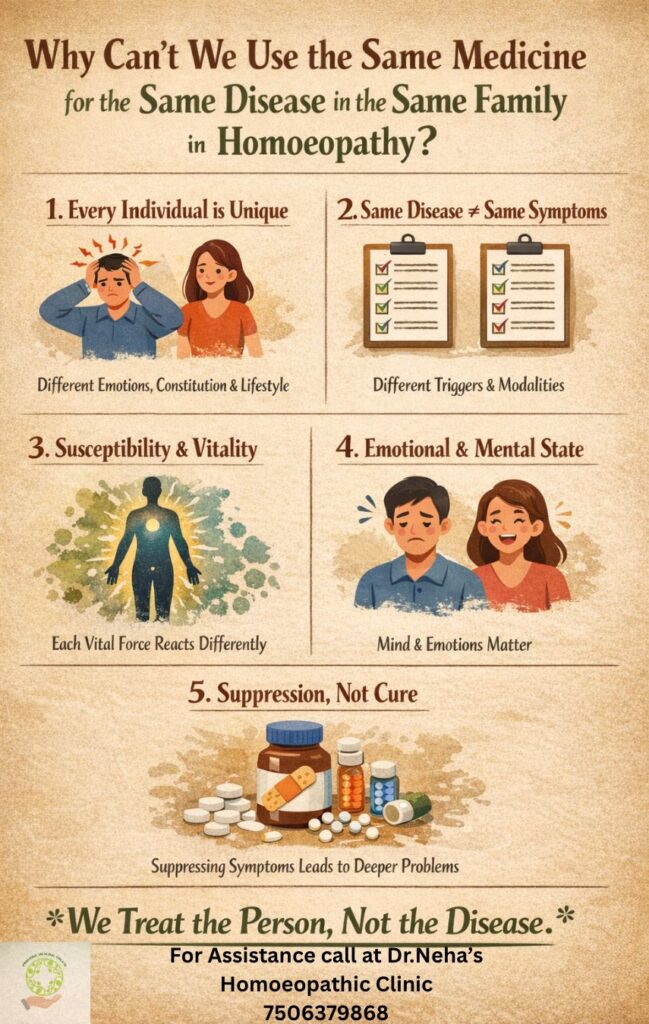
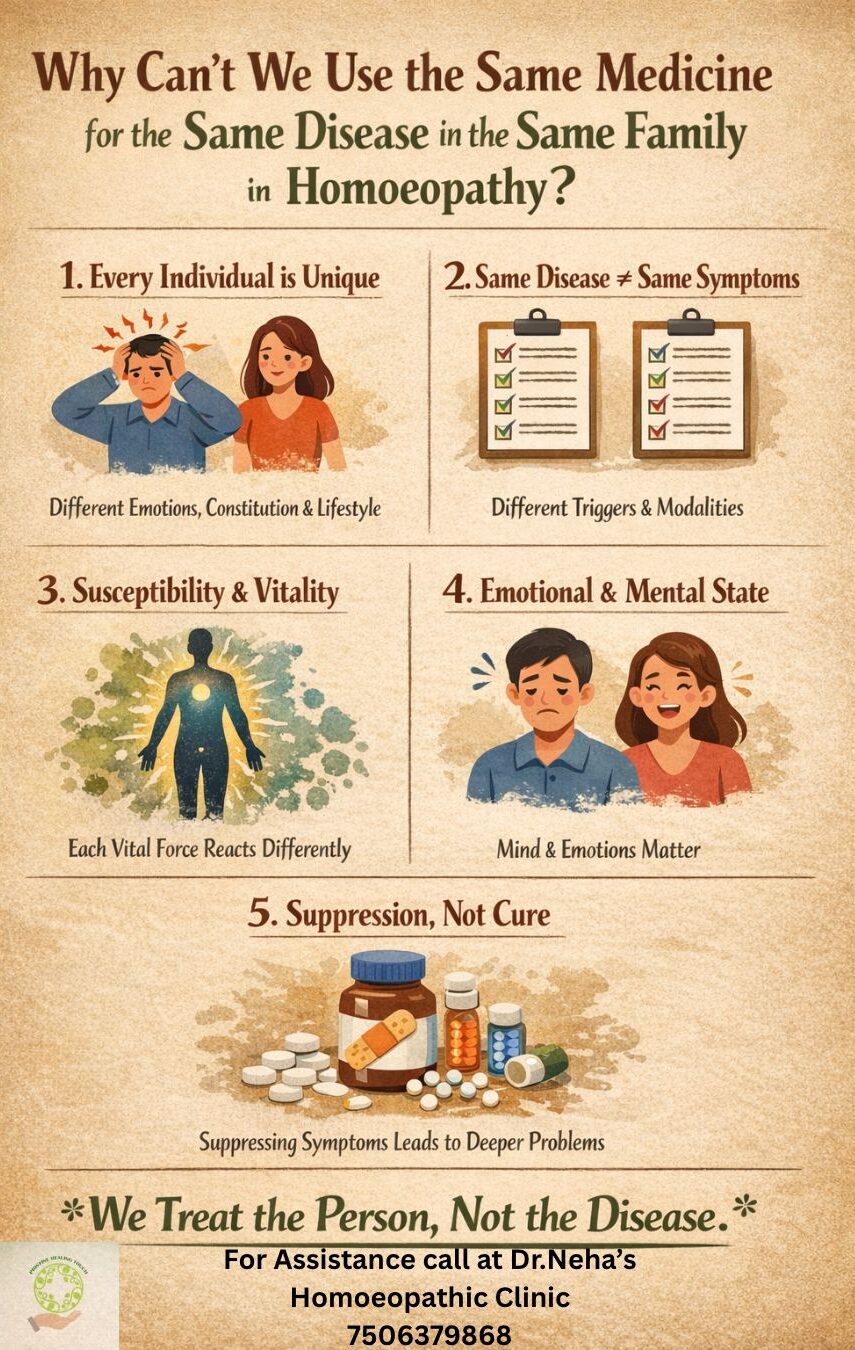
In homoeopathy, we cannot use the same medicine for the same disease in different individuals because homoeopathy treats the person, not the disease name.
1️⃣ Every Individual Is Unique
Even if two people have the same diagnosis (like migraine, arthritis, asthma, or anxiety), they differ in:
-
emotional makeup
-
physical constitution
-
sensitivity and immunity
-
lifestyle and stress response
Homoeopathy considers all these factors before selecting a remedy.
2️⃣ Same Disease ≠ Same Symptoms
A disease name is only a label.
Two patients with the same disease may have:
-
different triggers
-
different modalities (better/worse by heat, cold, rest, motion)
-
different associated symptoms
Homoeopathic medicines are chosen based on individual symptom expression, not the diagnosis.
3️⃣ Different Susceptibility & Vitality
Each person’s vital force reacts differently to stress, infection, and imbalance.
The remedy must match the person’s level of susceptibility, not just the pathology.
4️⃣ Emotional & Mental State Matters
Mental and emotional symptoms are key guiding factors in homoeopathy.
Two patients with the same illness but different emotional states will require different remedies.
5️⃣ Same Medicine for All Leads to Suppression, Not Cure
Giving the same medicine to everyone for the same disease may:
-
give temporary relief
-
suppress symptoms
-
lead to recurrence or deeper imbalance
True cure requires individualisation.
🌿 In One Line
In homoeopathy, there are no diseases — only diseased individuals.