
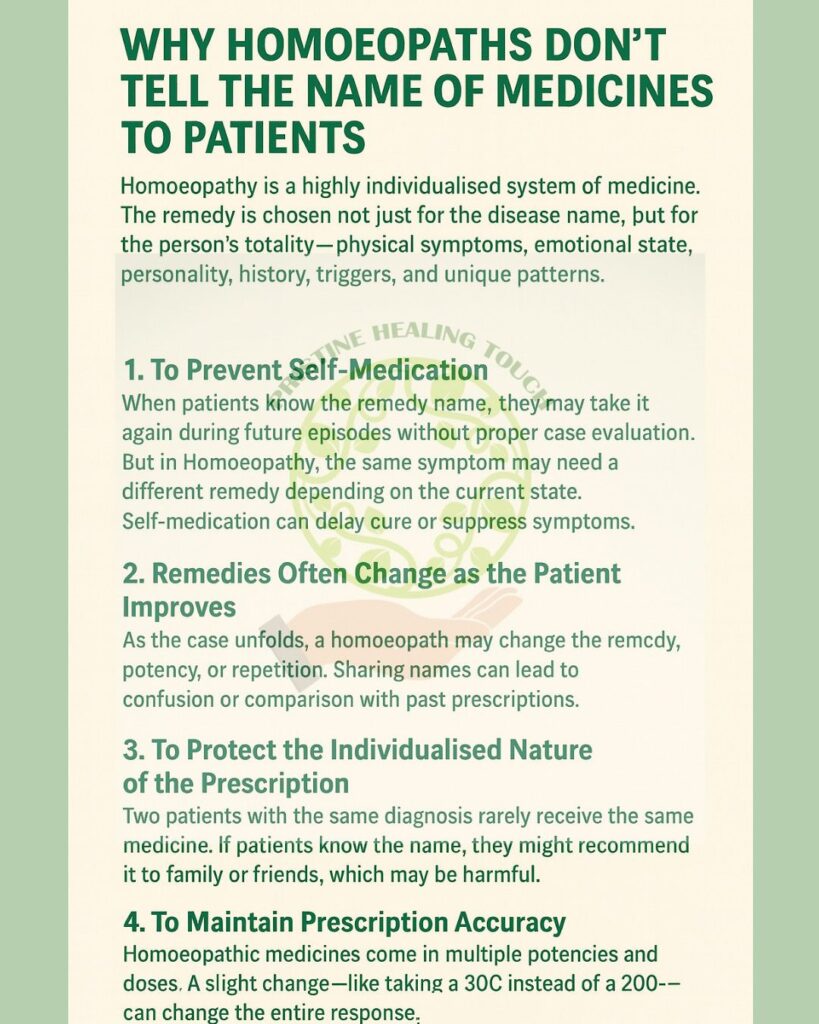
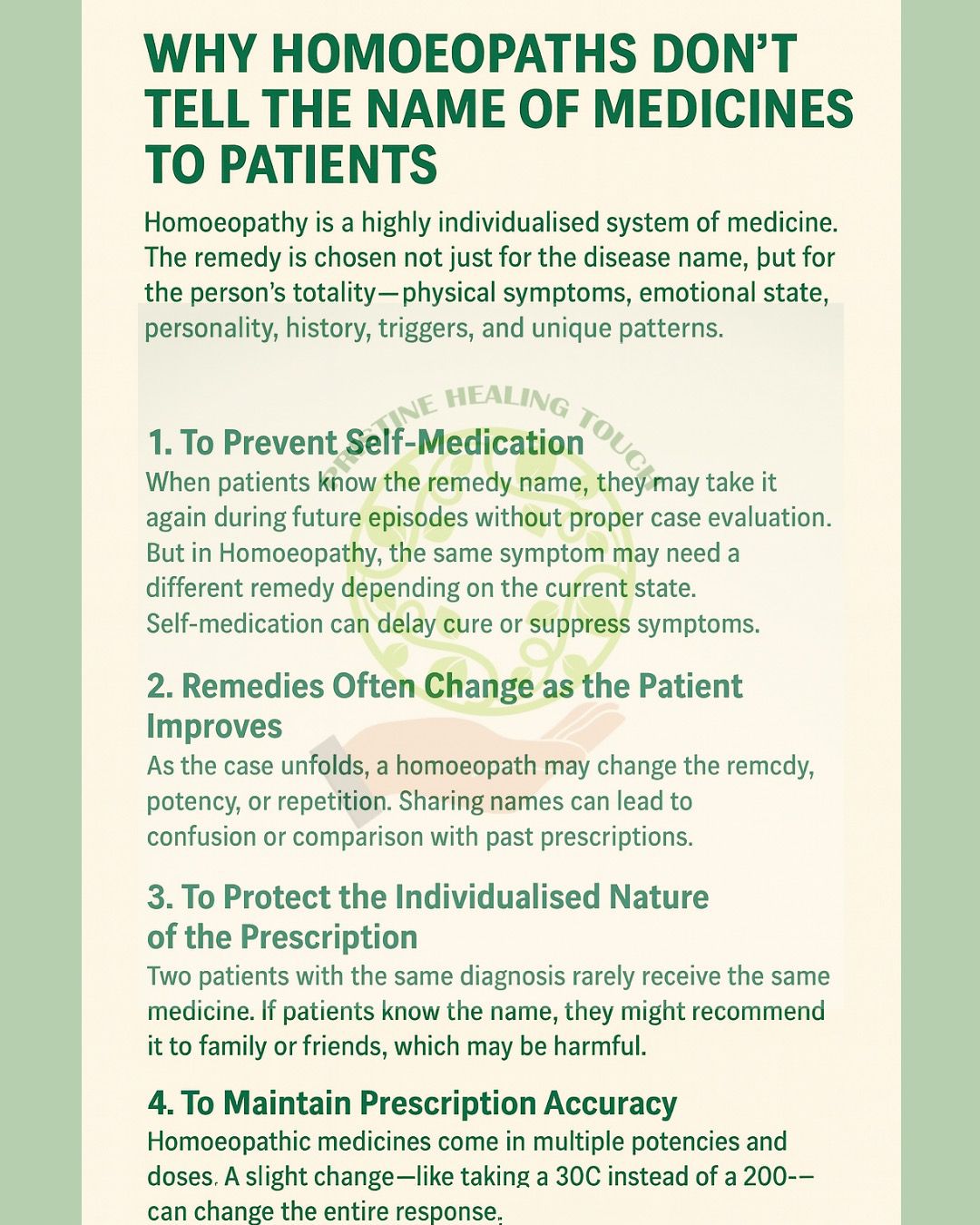
Homoeopathy is a highly individualised system of medicine. The remedy is chosen not just for the disease name, but for the person’s totality—physical symptoms, emotional state, personality, history, triggers, and unique patterns.
Here’s why we usually don’t disclose the medicine name:
1. To Prevent Self-Medication
When patients know the remedy name, they may take it again during future episodes without proper case evaluation. But in Homoeopathy, the same symptom may need a different remedy depending on the current state. Self-medication can delay cure or suppress symptoms.
2. Remedies Often Change as the Patient Improves
As the case unfolds, a homoeopath may change the remedy, potency, or repetition. Sharing names can lead to confusion or comparison with past prescriptions.
3. To Protect the Individualised Nature of the Prescription
Two patients with the same diagnosis rarely receive the same medicine. If patients know the name, they might recommend it to family or friends, which may be harmful.
4. To Maintain Prescription Accuracy
Homoeopathic medicines come in multiple potencies and doses. A slight change—like taking a 30C instead of a 200C—can change the entire response. Avoiding naming prevents incorrect repetition.
5. Because the Focus Is on the Healing, Not the Label
Homoeopathy values the healing process, observation, and follow-up rather than the label of the remedy. Patients often get better results when they trust the process rather than compare or Google every remedy.
6. Ethical & Professional Responsibility
Just like other medical systems don’t encourage sharing prescription details without context, homoeopaths also follow safe practice guidelines, ensuring every remedy is dispensed with careful supervision.